
Compare broadband deals UK to find the best internet offers for you
Compare broadband deals UK and discover how to pick the best offer for your needs. Understand hidden costs, speed, and switching tips.
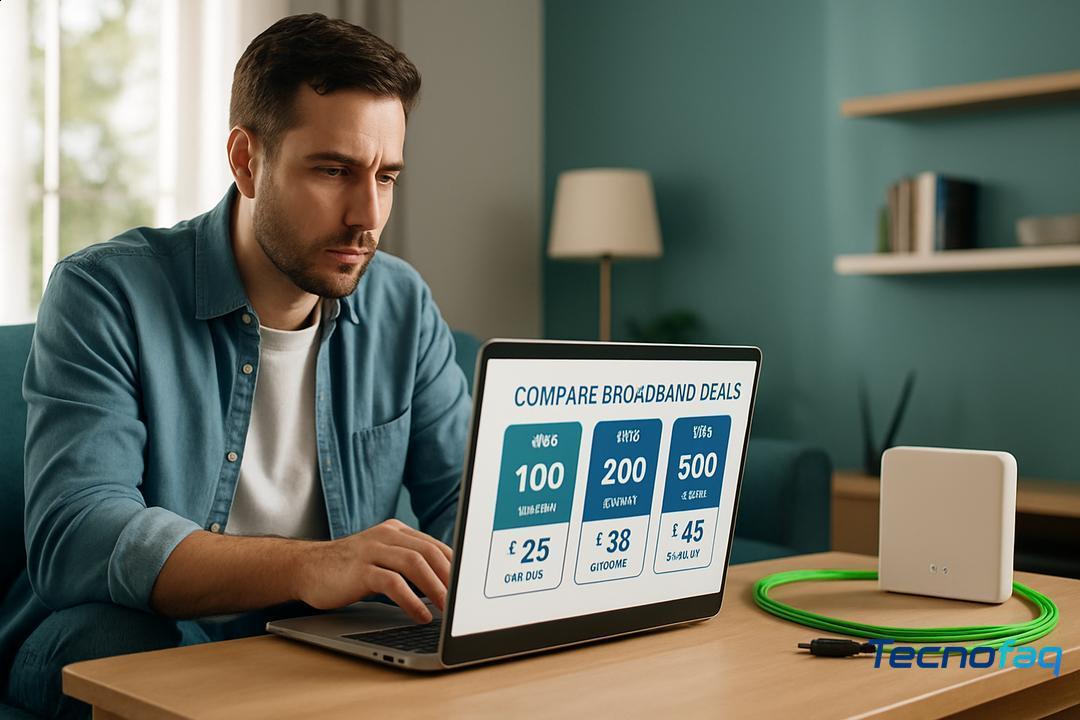
Ever felt like picking a broadband package is a bit like choosing a new mobile, but even more confusing? You see deals everywhere – cheap fibre this, ultrafast that – but what’s actually best for you?
Getting the right internet deal matters now more than ever. Almost every household task runs on Wi-Fi – working from home, streaming, online banking, schoolwork. In the UK, figuring out how to compare broadband deals UK is one of the most common financial challenges for families, especially as costs keep rising.
Lots of comparison websites promise quick answers. But they often miss key issues like sneaky mid-contract price rises, set-up fees that appear later, or the hassle of getting out of your old contract. Information overload can make it easier to just stick with what you have – even if it’s costing you more.
This article gives you a step-by-step guide to finding the best internet deal for your situation, without stress. You’ll learn about contract traps to watch for, latest trends in speeds and pricing, switching made simple, and realistic ways to cut your broadband bill. Whatever your needs or budget, you’ll walk away knowing how to get internet that works for your life, not just your postcode.
How to compare broadband deals in the UK
Comparing broadband deals in the UK might seem tricky, but you can do it step by step. The main thing is to look beyond the headline prices. You want a package that fits your needs, your postcode, and your budget, with no hidden catches.
Understanding different broadband types: fibre, ADSL, full fibre
The best broadband for you depends on what’s available and what you need. Most UK homes can choose between standard ADSL (through phone lines), part-fibre (fibre to the cabinet), or full fibre (fastest, fibre right to your premises). Fibre deals are now the most popular option and, in many areas, the cheapest start around £19–£24 per month. Cities may see special deals even lower.
If you only browse or use email, ADSL could be enough. But streaming, gaming, or a busy home means fibre is usually better. Always check which types you can actually get before deciding.
Using postcode checkers for availability
The broadband deals you see on TV or online don’t always exist in your area. The easiest way to know what you can actually get is to use a postcode checker. These tools show which speeds and providers really serve your address.
For example, a street in Manchester might have access to city-only full fibre deals, while some rural areas are limited to ADSL. Always check with your own postcode before choosing a deal. It can prevent disappointment and wasted time.
Comparing total contract costs (including set-up and voucher offers)
Headline monthly prices are only half the story. Some deals have set-up fees, require you to pay for the router, or include special vouchers. The real total cost is your monthly price times the contract length plus any one-off or hidden fees.
Providers may also increase prices mid-contract, so ask about this up front. Many people find longer contracts promise a lower monthly cost but can end up more expensive overall if you leave early or if prices rise after a few months. Always work out the total you will pay for the full contract period before signing.
How to check broadband speed for your address
Not all speed promises match what you’ll get at home. The actual speed depends on the line quality to your address and how busy the network is. Most provider sites let you check estimated speeds for your postcode before you apply.
You can also use free online speed test tools once you have broadband. If you’re switching, try running tests at different times of day to see if your current provider is slowing down. Make sure any new deal is fast enough for your needs, especially if you have people streaming or working from home. Don’t overpay for speed you won’t use, but avoid choosing too slow a package just for a cheaper price.
Key factors to consider before switching
Before switching broadband providers, it’s worth pausing to make sure you’re not caught out by hidden fees or tricky contract terms. A little homework can save you a lot in the long run.
When to check if you’re out of contract
Check if you’re still in a contract before switching. Leaving early can trigger an exit fee, which sometimes goes over £100. If your contract has ended, you’re likely free to switch without penalty. Many UK providers automatically move you onto more expensive rates once your contract ends, so it pays to double-check your paperwork or contact your provider.
What to ask about contract length and price rises
Ask how long the new contract will last and if the price can go up during the term. Some contracts have automatic renewals or price hikes after an introductory period. A short contract may cost more each month but gives you more flexibility. Know all the terms before you agree so you don’t get a surprise later on.
Evaluating your speed and usage needs
Work out what you need for your household. Look at a recent broadband bill or use the provider’s guide to estimate usage, if you mostly email and browse, you won’t need superfast speeds. But homes with gamers, streamers, or remote workers will benefit from fibre or full fibre connections. Pick a deal that fits your normal usage, not the headline speed.
Looking at bundle deals (TV, phone)
Bundles can sound attractive because they promise you broadband, TV, and even mobile in one package. But they’re not always cheaper. Only choose a bundle if it’s actually saving you money on services you already use. Compare the total price to separate deals to make sure you really get a bargain, not just more add-ons.
Popular broadband providers and current offers
The UK broadband market is full of choice, with many different companies and types of deals. Prices and what you get can change fast, so it pays to shop around and check the newest offers in your area.
Major nationwide providers vs local ‘altnets’
Nationwide broadband in the UK is mainly provided by big brands like BT (including Plusnet and EE), Virgin Media, Sky, TalkTalk, and Vodafone. They cover most areas and have millions of customers. But local alternative networks, called altnets, are growing fast. Examples include Community Fibre, Hyperoptic, and Gigaclear. These smaller providers often target cities, rural towns, or places left out by the biggest networks. They sometimes offer lower prices or special speeds not seen elsewhere. National brands give you wide coverage, while altnets can be cheaper or faster if available at your postcode.
Current trends in monthly pricing
Prices for fibre and full-fibre broadband are dropping, especially where smaller altnets compete. Some offer gigabit (very fast) speeds for as low as £26 a month, while big providers may ask closer to £35 or even £55 for top speeds. In October 2024, Community Fibre offered 900–1000 Mbps from £26, and Virgin Media had gigabit deals around £35 after an initial free period. Wide choice means it’s worth checking current prices at your address for the type of broadband you want.
Latest offers, freebies and set-up costs
Free set-up is common, especially from altnets and sometimes major brands trying to attract new customers. Some deals come with vouchers, free months, or a free router. For example, Virgin Media has offered three months free to new gigabit customers, and others may bundle Wi-Fi upgrades. Always read the offer carefully to see if set-up costs or delivery fees are hidden in the small print.
Rise of WiFi 6/7 and multi-gigabit deals
Many providers now push higher speeds using the latest technology, like WiFi 6 or WiFi 7 routers. Full-fibre lines can hit over 900 Mbps, and some go above 1,100 Mbps. Bigger brands and altnets both offer multi-gigabit speeds, but you’ll often need the latest Wi-Fi router to really feel the benefit. If your home has a lot of online devices, or you want smooth 4K streaming in every room, checking for these upgrades can be a good move.
Tips to save money on your broadband bill
There are several ways to bring down your broadband bill without losing out on quality or speed. The important thing is to take action when your contract ends, and to avoid paying for things you don’t need.
Negotiating with your provider when out of contract
As soon as your contract ends, your provider is likely to move you to a higher rate. This is a perfect time to call and ask for a better deal. Most people will get an instant discount simply by mentioning cheaper offers from other providers. Some customers in the UK have managed to save £10–£15 a month through this kind of call. Always ask to speak to the cancellations or retentions team, who are authorised to offer bigger discounts.
Switching timing and cancellation tips
The best time to switch is as soon as your contract is up. Leaving before might mean you pay an exit fee. Most providers need 14–30 days’ notice to cancel, so plan ahead. If you’re moving home or your deal is ending, remind yourself to start the process a month in advance so there’s no gap in your service or a big bill you weren’t expecting.
Avoiding unnecessary extras and overpaying for speed
Many deals include add-ons like higher Wi-Fi speeds, antivirus, or TV bundles. Only pay for extras you actually need. Broadband advertisers love to promote their fastest packages, but most UK households don’t need more than 50–100 Mbps for normal use. Choosing the right speed and skipping the frills could cut your bill by £8–£15 each month, based on recent deal data.
Social tariffs: who qualifies and how to apply
Some providers offer special low-cost deals called social tariffs for people on certain benefits, like Universal Credit or Pension Credit. These can lower your broadband bill to about £12–£20 a month. To apply, check your provider’s website or call and ask if you’re eligible. These tariffs usually have shorter contracts and no exit fees, making them a sensible option if your budget is tight.
Ways to make sure your next broadband deal really suits your needs
The best way to make sure your next broadband deal really works for you is to match it to your everyday life. Start by checking which services are actually available at your postcode. Speeds and types can differ from street to street, even in the same town.
Think about what you really use the internet for. If you often work from home, have kids streaming or gaming, or use lots of devices at the same time, it makes sense to go for fibre or full-fibre packages. If you just check emails and browse the web, you can usually choose a slower (and often cheaper) service.
Don’t let flashy extras or big bundle deals distract you if you won’t use them, extra TV channels or speed boosts can add to your bill fast. Always look at the total contract cost, including set-up fees and any increases after an introductory deal runs out.
Customer satisfaction scores can help if you’re stuck between a few providers. Recent research shows smaller fibre specialists like Community Fibre and Zen Internet often have better customer reviews than some of the big national brands. For example, Community Fibre scored highest in a 2024 Which? survey, while larger providers were rated lower for support and reliability. In the end, a deal that works for your neighbour might not be right for your household, shop around for the right speed, the lowest real price, and a contract that fits your needs, not just what’s popular.
Key Takeaways
This guide helps you confidently choose the best broadband deal to match your needs and budget in the UK.
- Check your postcode: Availability and speeds vary by location, so always use a postcode checker before comparing deals.
- Understand contract terms: Watch for contract length, exit fees, and possible mid-contract price rises.
- Compare all costs: Factor in set-up charges, monthly costs, and extras before committing to a deal.
- Match speed to your usage: Many households need only 50–100 Mbps unless there are gamers or multiple streams at home.
- Negotiate and switch smartly: Out-of-contract customers often get better prices by negotiating or switching after the minimum term.
- Consider provider type: Local fibre specialists like Community Fibre or Zen Internet often outperform national giants in customer ratings and price.
- Look out for bundle offers and extras: Only pay for extras like TV bundles if you’ll actually use them, as these raise the monthly price.
- Check for social tariffs: If you receive certain benefits, special low-cost broadband deals are available from major providers.
The main idea is to compare thoroughly, be aware of hidden costs, and pick a deal shaped around your household’s real internet habits.
Use a broadband comparison site and enter your postcode. This shows which providers and speeds are available for your location.
It depends on your usage. Light browsing and email need less than 30 Mbps, but families with streaming or gaming may need 50 Mbps or more.
It’s possible, but you may have to pay an exit fee. Check your current contract or contact your provider to confirm before switching.
Not always. Many full fibre and some cable broadband deals don't require a landline, but traditional ADSL services still do.